
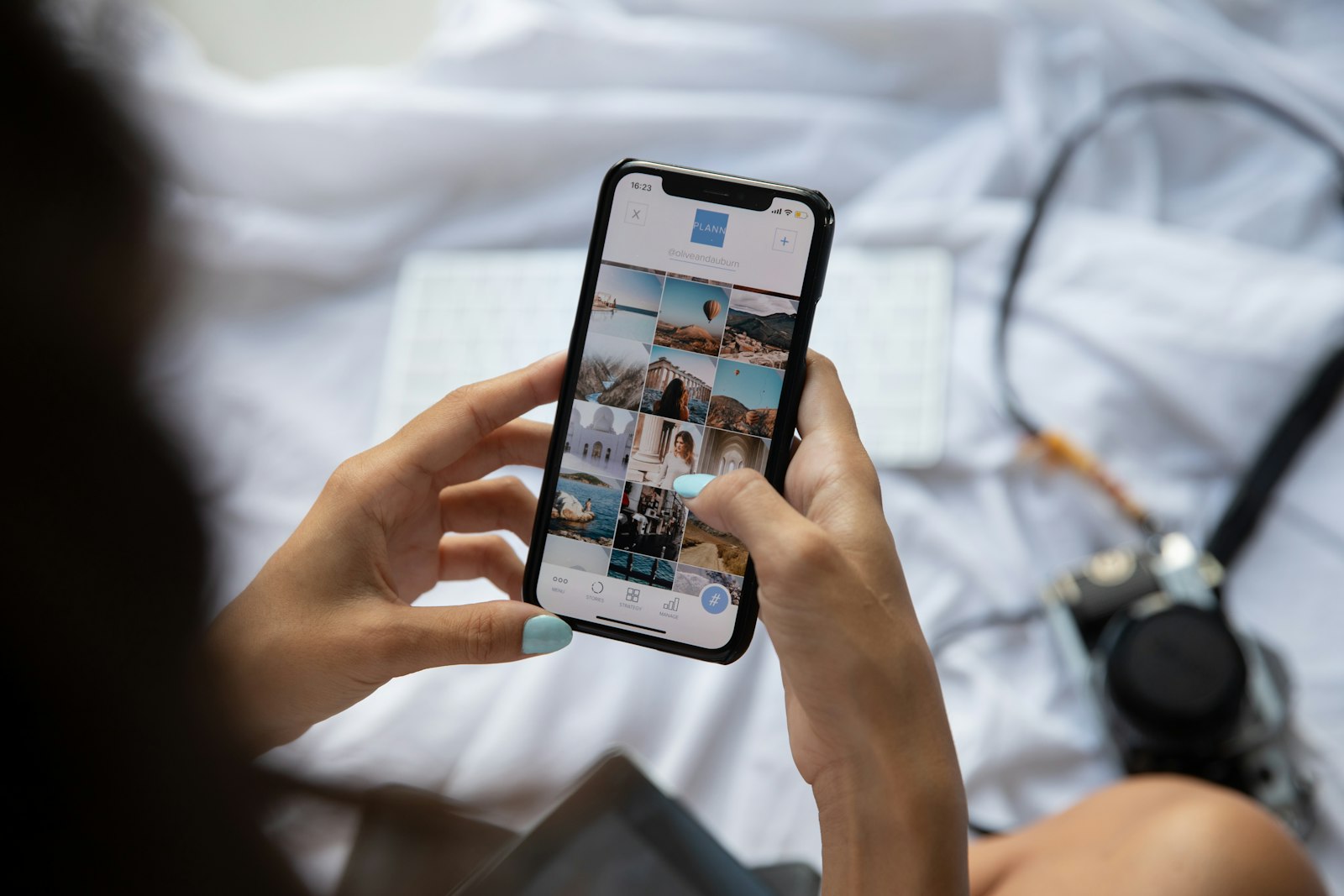
We take more pictures than any generation in history, and we look at fewer of them. Your phone probably holds thousands of moments right now: a birthday cake, a sunset from the car, a dog asleep on the couch. Most of them will never be seen again.
It wasn’t always this way. Here’s what the numbers say about how we save memories now, how we used to, and why one photo a day might be the fix.
Thousands of Photos in Your Pocket

The average American phone holds more than 3,100 photos and videos, according to a Mixbook survey of nearly 2,000 Americans. A 2025 YouGov poll for Mixbook found that 48% of U.S. adults have more than 1,000 photos on their phones, and 21% feel overwhelmed by them (Mixbook).
The pile keeps growing. People worldwide take about 5.5 billion photos a year, and younger adults snap about 1,468 a year each, three times as many as people 55 and over (Popsa, via Digital Information World).
Most of Them Are Never Seen Again
About 70% of the photos on our phones are never looked at again. That’s the finding of Popsa’s 2026 Memory Economy Report, which surveyed 8,000 people in the U.S., UK, France and Germany. Only 16% had looked back at more than a quarter of their photos in the past year (Digital Information World).
Other surveys agree:
- 80% of people have photos or videos they haven’t looked at since the day they took them (Mixbook).
- 33% of Americans rarely or never look at their photos from the past year (Mixbook and YouGov, 2025).
- 37% say their important photos get lost among the rest, and 49% say a messy camera roll stresses them out (Popsa).
We aren’t short on memories. We just can’t find them.
The Yearbook on the Shelf
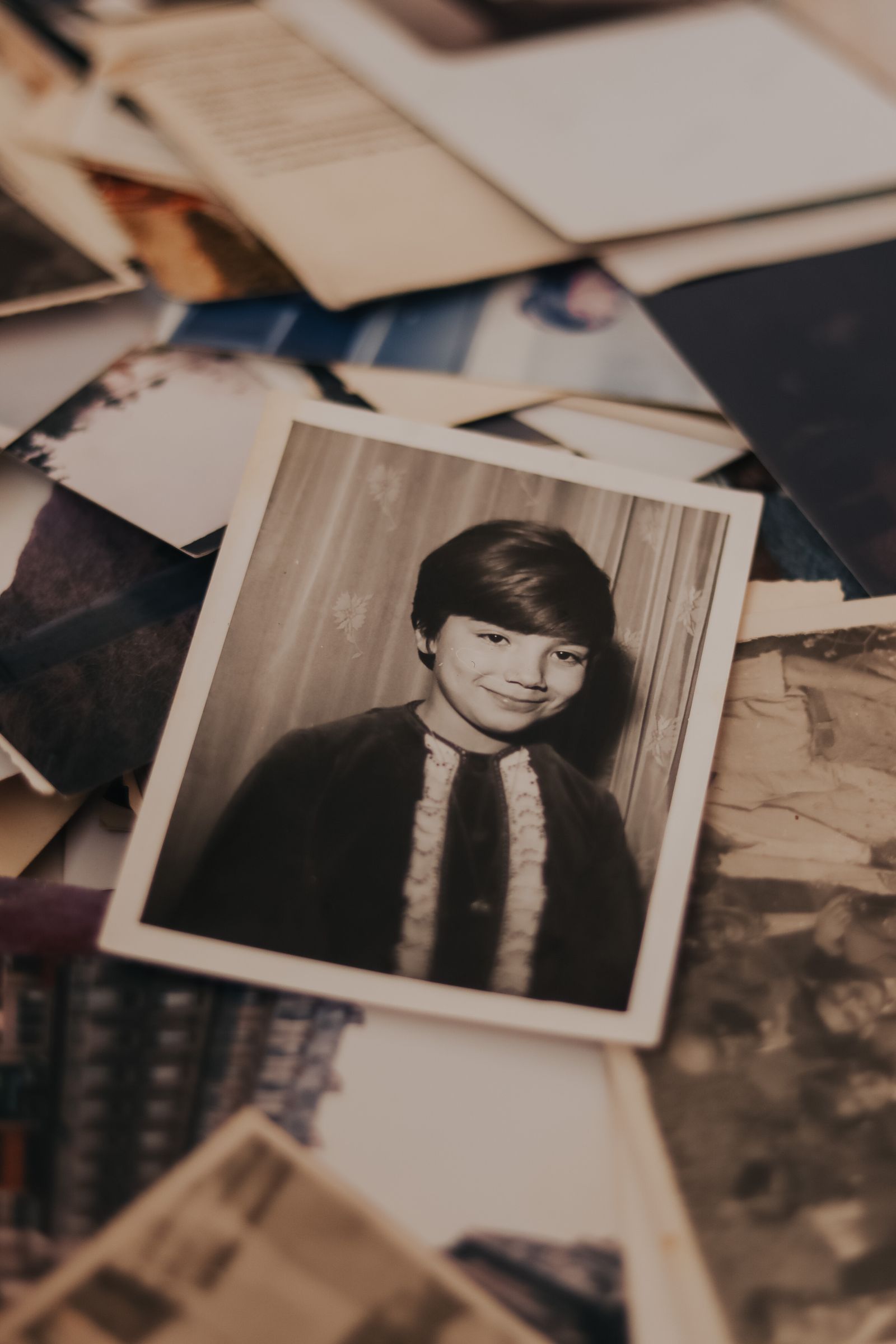
Old school yearbooks are the opposite of a camera roll: one book, one year, kept for decades. A 2024 YouGov poll found that 48% of parents with grown children still have their child’s yearbook (YouGov). Sites like E-Yearbook.com have put thousands of old yearbooks online and charge people to search them (NPR).
We couldn’t find a solid survey on how often adults open their yearbooks years later. But think about the last time one came off the shelf. It probably took an hour, and someone laughed at the hair. A printed book gets opened. A folder of 3,000 files rarely does.
When Every Photo Got Printed
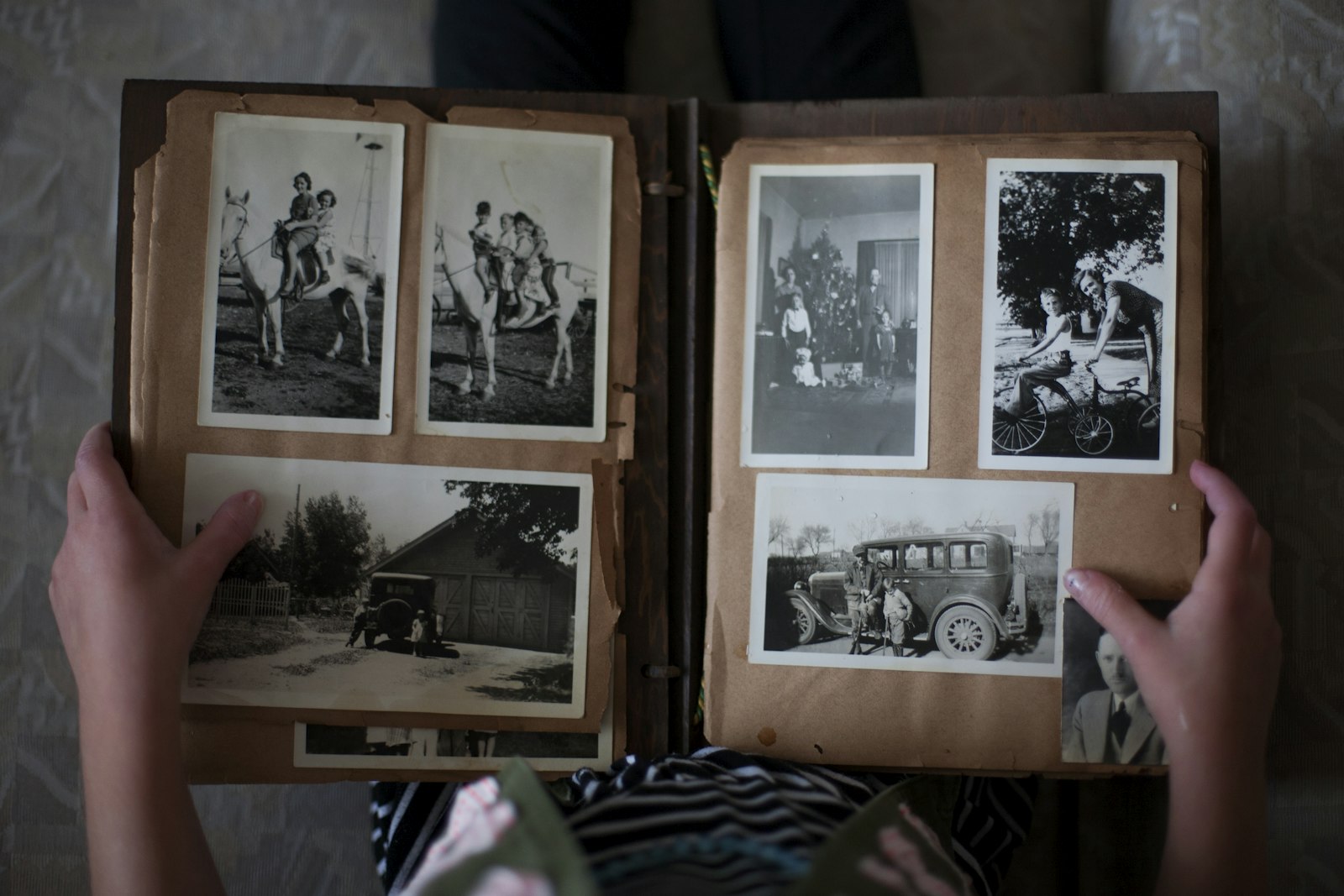
In the 1970s, 80s and 90s, taking a picture meant printing it. You shot a roll of 24, dropped it at the drugstore or a one-hour lab, and came home with an envelope of prints. The best ones went into an album. The rest went in a shoebox you still have.
The numbers were huge for a world without phones:
- At the film peak in 1999, people took about 80 billion photos a year, according to Kodak (Benedict Evans).
- Americans made 33.1 billion film prints in 2000 alone (Deseret News).
- One-hour photo labs started spreading after Noritsu’s first minilab in 1976 (Digital Imaging Reporter).
Today we take far more photos and print far fewer. Americans took about 1.2 trillion images in 2016, but made only 8.2 billion printed items, including prints, books and gifts (Digital Imaging Reporter). Printing still matters, though: 48% of people feel more connected to their memories after printing photos (Popsa).
Why We Forget So Much
Life moves fast now. Work, school runs, practices, trips, group chats, a hundred small plans a week. When every day is full, the days start to blur. Ask yourself what you did on a Tuesday in March. Most of us can’t say.
Taking more photos doesn’t fix it, and it can make it worse. In a 2013 study, psychologist Linda Henkel had students tour an art museum. They remembered objects they photographed less well than objects they just looked at. She called it the “photo-taking impairment effect” (Association for Psychological Science). The camera remembers, so we don’t.
There was one exception. When students zoomed in on one detail, they remembered the whole object better. Paying attention to the shot is what makes a moment stick.
One Photo a Day
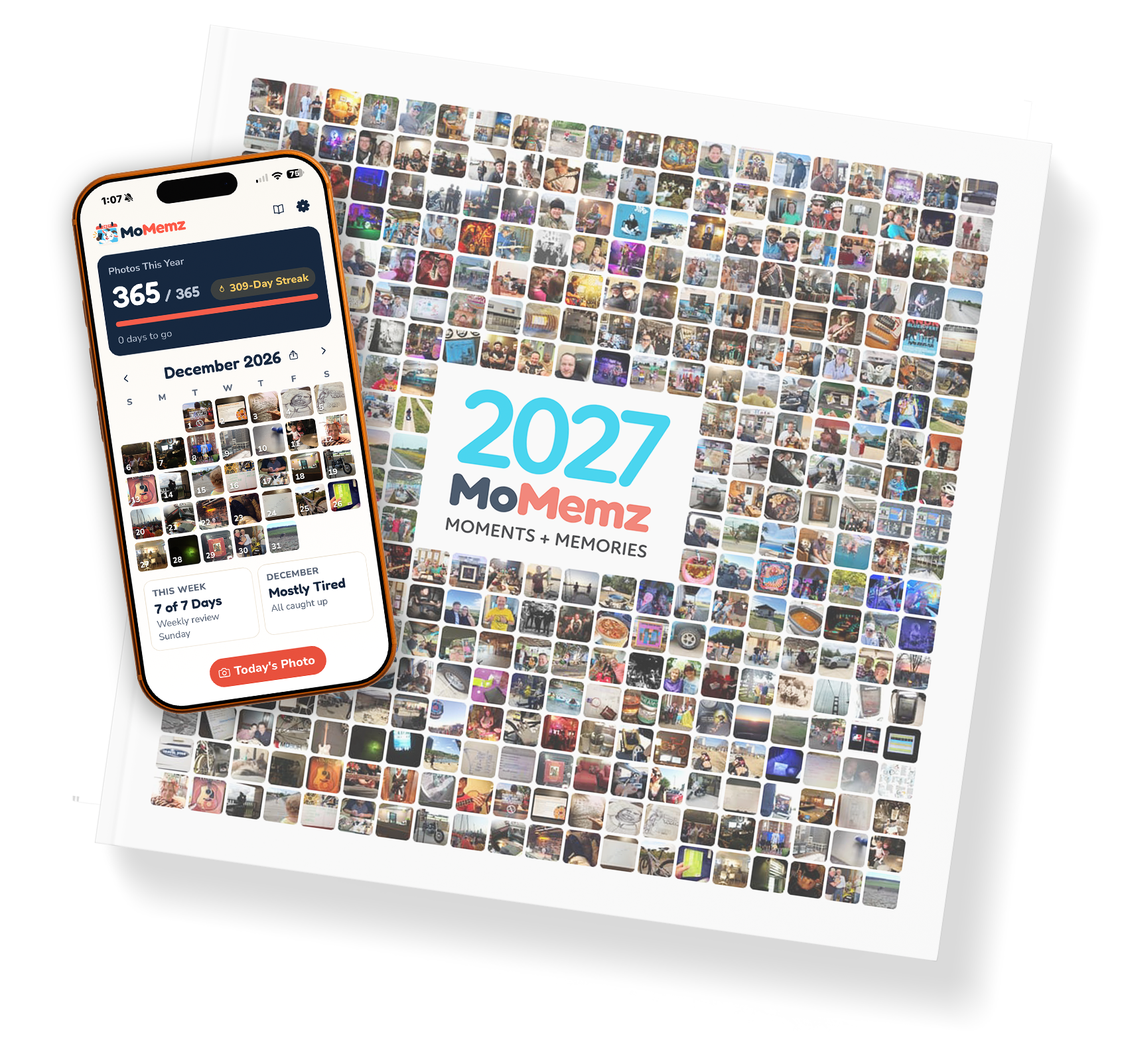
The fix isn’t more photos. It’s fewer, chosen with care. Pick one photo each day, the one that says what today was. At the end of the year you have 365 moments you actually looked at, in order, with nothing lost in the pile.
That’s why we built MoMemz. Here’s what it gives you:
- One moment a day, chosen. Pick the one square photo that sums up today. No more digging through thousands.
- A calendar that fills itself in. Watch your year come together day by day, and keep your streak going.
- More than a picture. Add an emoji, a mood and a short caption, so you remember how the day felt, not just how it looked.
- A real book at year’s end. Your 365 days become a printed square book you can hold, like a yearbook of your own life.
- Private by default. Your photos are yours. Your mood data is never shared or used for ads.
- Your full photos, kept safe. MoMemz stores the full original of every photo, and you can download your whole year anytime.
- iPhone and Android. Start any time and keep going wherever you are.
Twenty years from now, the book on the shelf is the one that gets opened. Start yours today.
From Camera Roll to Bookshelf
photos on your phone will never be looked at again. Only the 30 in coral get a second look.
Popsa Memory Economy Report, 2026Sources
- Study Finds 70% of Smartphone Photos Are Never Revisited, Digital Information World, on Popsa’s Memory Economy Report (2026)
- Photo Habits Report, Mixbook and YouGov (Nov 2025)
- Digital dust: Most Americans don’t clean out their camera roll, TechSpot (2023)
- Nearly all parents of adult children saved childhood photos and art, YouGov (2024)
- Yearbooks No Longer 2 Good 2 Be 4-Gotten, NPR (2010)
- How many pictures?, Benedict Evans (2015)
- A developing situation, Deseret News (2003)
- Photo Printing Is on the Rise, Digital Imaging Reporter
- No Pictures, Please: Taking Photos May Impede Memory of Museum Tour, Association for Psychological Science (2013)